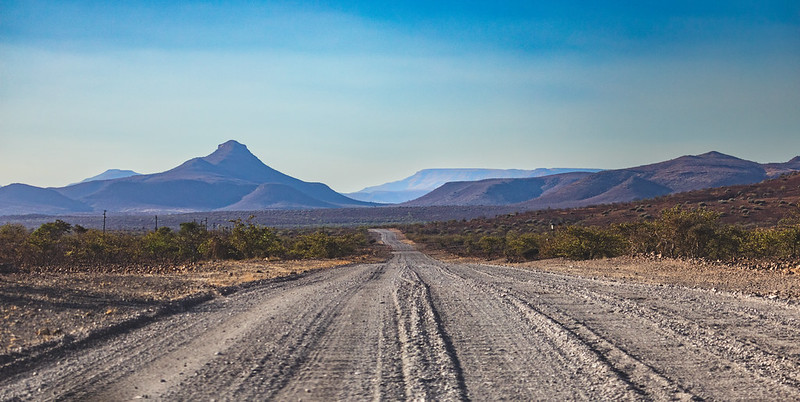
If you’re planning your first Namibia northern circuit self drive and you’re not sure where to start, this is the route most people end up on. It’s not the only way to see Namibia — but for a first trip, it’s the one that makes the most sense.
In fourteen days, you move through five distinct landscapes: the highlands around Windhoek, the red dune sea of Sossusvlei, the Atlantic coast at Swakopmund, the game-rich flats of Etosha, and the elephant country of Damaraland. The loop returns cleanly to Windhoek. Done properly — with a 4×4, a rooftop tent and camping gear — it’s one of the best road trips on the planet.
Why Most First-Timers End Up Here
Namibia is enormous, and the temptation when planning is to try to cover too much of it. First-time visitors often build ambitious itineraries that run out of road, energy, or both before they’re done.
The Northern Circuit avoids that trap. It covers the highlights most people come for, keeps daily driving distances manageable, and builds in enough time at each stop to actually experience it. It also loops — you start and finish in Windhoek, which simplifies flights and removes the headache of a one-way vehicle return.
For a first trip, it works.
The Route at a Glance
Total distance: approximately 2,200km
Duration: 14 days
Vehicle: 4×4 with rooftop tent and full camping kit
| Leg | Distance | Driving Time |
|---|---|---|
| Windhoek → Sossusvlei | ~360km | 4–4.5 hours |
| Sossusvlei → Swakopmund | ~340km | 3.5–4 hours |
| Swakopmund → Etosha (Okaukuejo) | ~450km | 5–5.5 hours |
| Etosha → Damaraland | ~280km | 3–3.5 hours |
| Damaraland → Windhoek | ~300km | 3.5 hours |
All times are estimates on tar and well-graded gravel. Allow extra on the approach roads into Sossusvlei and the tracks through Damaraland.
Day-by-Day Breakdown
Days 1–2: Windhoek
Arrive, rest, and use the time properly. Windhoek is where you sort out everything that determines how smooth the rest of the trip runs — groceries, gas, a final check on the vehicle and camping kit. Checkers and Pick n Pay at the Maerua Mall are well-stocked. Fill the tank before you leave the city.
The city itself is worth a half-day on foot. The Craft Centre, the old Christuskirche, a coffee somewhere quiet. Don’t exhaust yourself before you’ve started.
Days 3–4: Sossusvlei
The drive south takes you through the Khomas Hochland and down into the Namib. The landscape shifts gradually — flatter, drier, quieter — before the red dunes appear on the horizon.
Get up before dawn on Day 4. The light on Dune 45 and Big Daddy at sunrise is the image most people take home from Namibia. By 10am the heat is serious and the soft sand exhausting. Be back at camp by late morning.
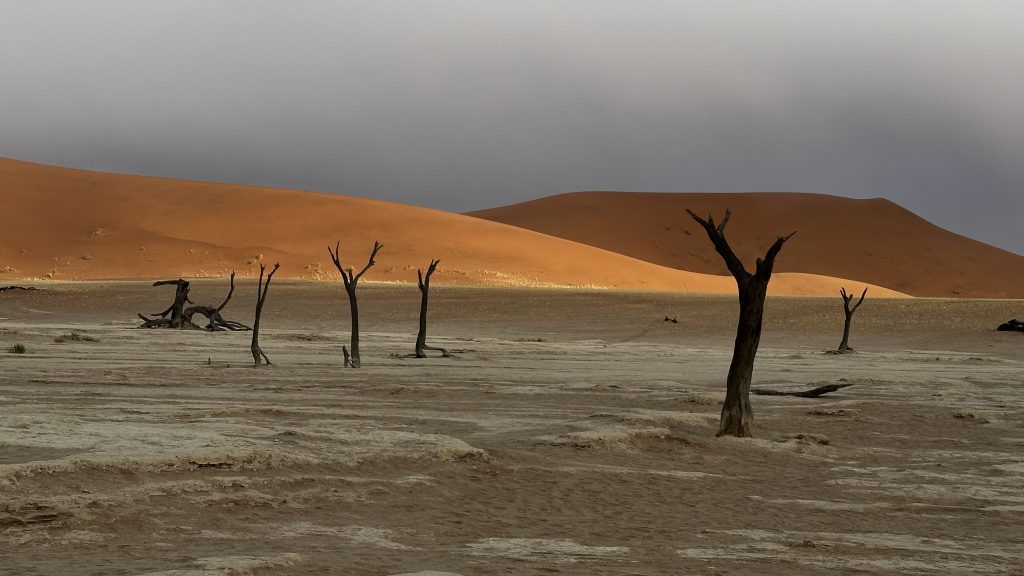
Dead Vlei — the bleached clay pan with its fossilised camel thorn trees — is a 20-minute walk from the public car park. It is not optional. Go.
Camping inside the Namib-Naukluft Park puts you as close to the dunes as it’s possible to get. Sesriem Campsite is the main option — basic, well-run, and positioned to make an early morning departure realistic.
Days 5–6: Swakopmund
The drive northwest crosses the gravel plains of the Namib before dropping into Atlantic fog. Swakopmund is the most European-feeling town in Namibia — wide streets, German colonial architecture, good coffee, fresh fish at the waterfront.
If adventure activities are on the list, this is where to do them. Sandboarding, quad biking, skydiving, and kayaking with seals are all available and well-run. Or simply eat well, rest, and resupply before Etosha.
Days 7–10: Etosha National Park
Four days in Etosha is the right amount for a first visit. It gives you time to cover both the western and eastern ends of the park — different habitats, different species — and to actually sit at waterholes long enough to see them perform.
Camping inside the park puts you closer to the wildlife and removes the need to rush back to a lodge before dark. Okaukuejo, Halali, and Namutoni all have campsite facilities. Okaukuejo’s floodlit waterhole is one of the best wildlife-watching spots on the continent — lion, elephant, and rhino through the night, from your own camp chair.
Enter through Andersson Gate in the south and work east over the four days, exiting near King Nehale. Or reverse it. Either way, don’t rush.
For detailed strategy on waterhole timing, seasonal differences, and gate logistics, see the Etosha First-Timer’s Field Guide.
Days 11–12: Damaraland
North of Etosha, the landscape opens into something rawer — volcanic rock, vast plains, very little traffic. Damaraland is one of the least-visited sections of the Northern Circuit and one of the most rewarding.
The main draw is desert-adapted elephants. These are not park animals — they range freely across communal conservancy land and can sometimes be spotted crossing the road between Palmwag and Kamanjab. A local guide significantly improves your chances.
Twyfelfontein holds one of Africa’s largest concentrations of rock engravings, some over 6,000 years old. Allow two hours and go with the guide — the context matters.
Camping here often means smaller, more remote sites on conservancy land. That’s the point.
Days 13–14: Return to Windhoek
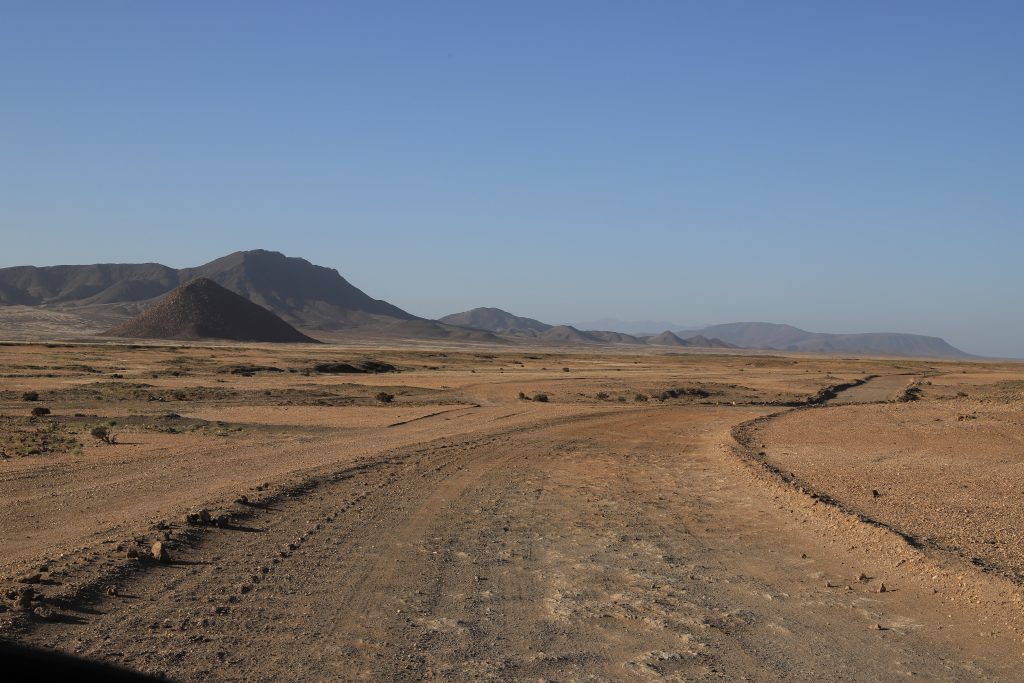
Long driving days south through flat acacia scrub, with good fuel stops at Outjo and Okahandja. You’ll be back in Windhoek in time for a final dinner and a morning departure.
Vehicle Setup
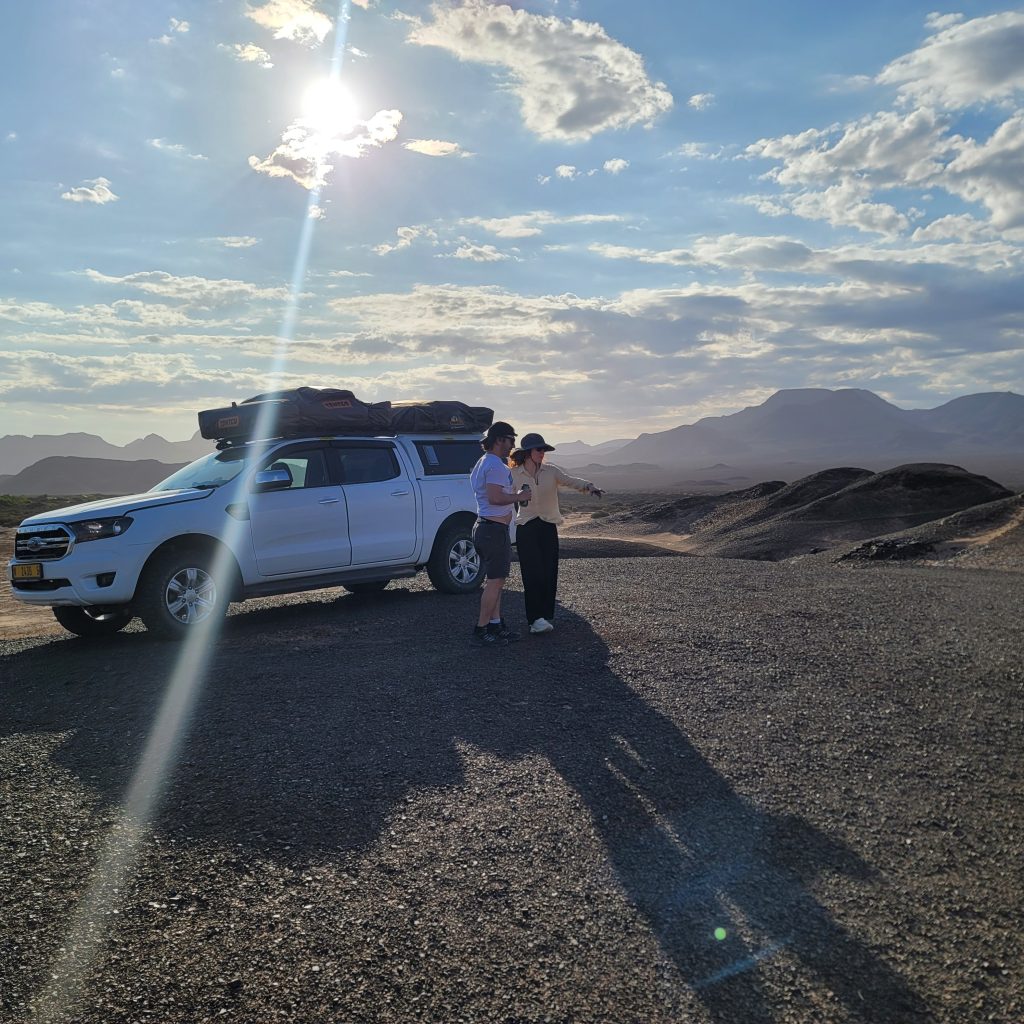
A 4×4 with a rooftop tent and full camping kit is the right setup for this trip. It’s not about having a capable vehicle in a technical sense — most of this route is graded gravel and tar. It’s about what the setup gives you.
Camping inside Etosha means waking up to waterholes before the day visitors arrive. Remote sites in Damaraland mean sleeping somewhere most tourists never reach. A rooftop tent means none of that requires a booking three months in advance.
A fridge keeps food fresh across the long days between towns. Cooking gear means you’re not dependent on restaurant stops in places that don’t have them. Recovery equipment — tow rope, tyre repair kit, jump cables — is basic insurance on a trip this long.
The Pocket Guide Namibia app has GPS coordinates, waterhole notes, road condition flags, and offline maps for every stop on this route. Download it before you leave Windhoek.
Practical Notes Before You Go
Fuel: available at all main stops. Never pass a petrol station without topping up — distances between reliable fuel points can exceed 250km in Damaraland.
Water: carry a minimum of 4 litres per person per day. More in summer.
Seasons: June–September is dry season — cooler, better wildlife sightings in Etosha. November–April is green season — fewer tourists, greener landscapes, more dispersed game. For a first trip, the dry season is the cleaner choice.
Etosha bookings: NWR camps fill up early in peak season. Book the Etosha nights before anything else.
Signal: patchy once you leave the main B-roads. The Pocket Guide Namibia app works fully offline — download the app (which includes this route) before you go.
Before You Leave
The Northern Circuit isn’t the most remote route in Namibia. But it’s the one that gets under your skin. Most people who do it once start planning the next trip before they’ve even landed home.
Plan carefully, carry what you need, and take the time to actually stop.